Hello Beekeepers !
Summer/Fall/Winter–it’s all here at the same time! Just a few simple things to consider as you complete your winter prep (there’s more to it than this but this is a good starter list) – remove extra space (boxes) in the hive, remove any queen excluders, Langstroth top entrances should be open to allow ventilation through the hive.
RPBBA Calendar of Events
📅 Monday, Nov 6th – Honey Bee Planning meeting @7pm
📅 Monday, Nov 13th – Club Meeting @ 7pm
📅 Monday, Nov 20th – Study Group @ 7pm
November Meeting
During our November Club Meeting we will have presentations about products from the hive. This will be an informative and delightful meeting. Doors open at 6:30pm for socializing.
2023 Beginner Beekeeping Course
RPBBA’s Beginning Beekeepers Classes will start on Saturday, Feb 2nd at the Rockwood Park Nature Center and will continue every 2 weeks for 4 sessions. The class is held from 9am-4pm each session.
Participants will receive instruction on:
🐝History, hive organization & location 🐝Woodenware and equipment
🐝Colony dynamics 🐝Diseases, pests & predators
🐝Getting started 🐝The beekeeping year
🐝Floral sources 🐝Bee Field Day (hands-on apiary day)
Register on the RPBBA website. This class fills up quickly.
rockwoodbeekeepers.com/beginner-beekeeping.
Will you be selling nucs, packages or queens this year?
Ever so often, the question pops up- how do I get started? Where can I get my bees? We are in the process of updating the 2023 Resources list. If you plan to have bees for sale next year, tell us your plans. Click here to have your information added to our 2024 Resources*.
*This is simply a list of local suppliers; RPBBA does not endorse or give preference. Buyers are encouraged to do their own research before making their decision to purchase from any supplier.
Virginia State Beekeepers Association (VSBA)
We are HERE at the VSBA and ready to learn, share and connect with other beekeepers and bee enthusiasts!
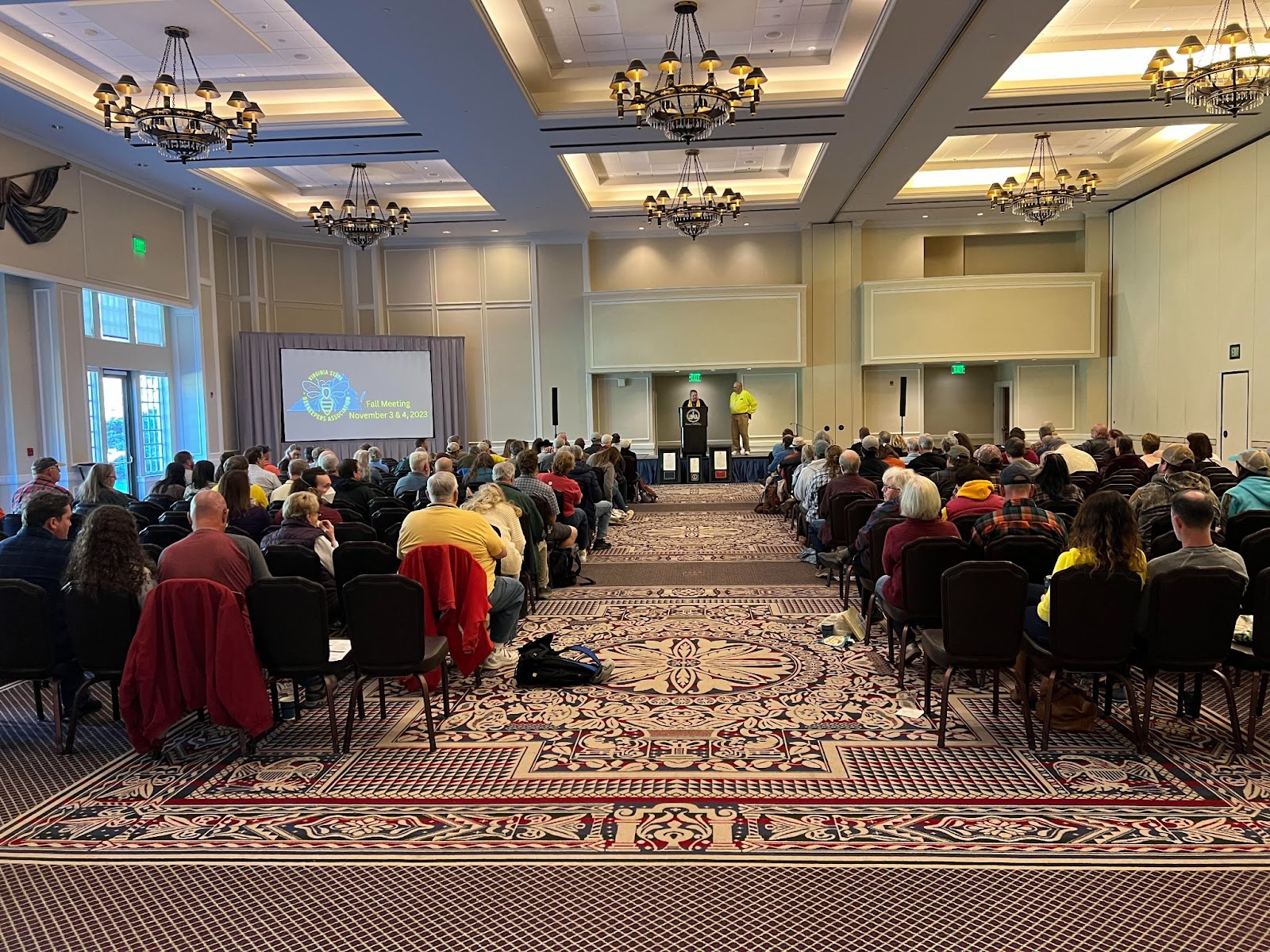
Make your plans now to join VSBA for the Spring 2024 (July). Organizers are looking at some locations in SW Virginia (so you know it’s going to be beautiful!)
Heads Up: Winter Preparation Workshop
There’s a hands-on opportunity for winter preparation at Dandelion Springs Apiary on November 12th. Learn more and register here:
Winter Prep Workshop 2023 — Dandelion Springs Apiary
This Month in the Hive (November)
The cold weather has arrived (maybe). Colder temperatures will find bees gathered into a cluster that is broken only when the temperature outside the hive rises above 57 degrees. During these warmer days, bees will take cleansing flights.
This is the month to make sure that there are sufficient winter stores in your hives. It is becoming too cold to feed syrup.On a warm day, heft the hive and add honey frames or candy boards. You may consider feeding a pollen substitute in the form of a patty. If your hive(s) have sufficient honey now, you may need to wait until January/February to add candy boards and pollen patties.
It is generally a good idea to stay out of the hives in November unless there is an emergency. The queen should stop laying by the end of November and the population should be steady, with a few bees lost each day. Remember to keep snow and ice from blocking entrances and ventilation holes in the hives.
Use this time to clean and organize your materials, order bee gifts for the holidays, and say thank you to family and friends who’ve endured you and the bees during the spring and summer. Reserve packages or nucleus hives for next April if not already done.
[From https://buzzwordhoney.com/wp-content/uploads/2012/12/Northern-Virginia-Honeybee-Annual-Cycle.pdf]
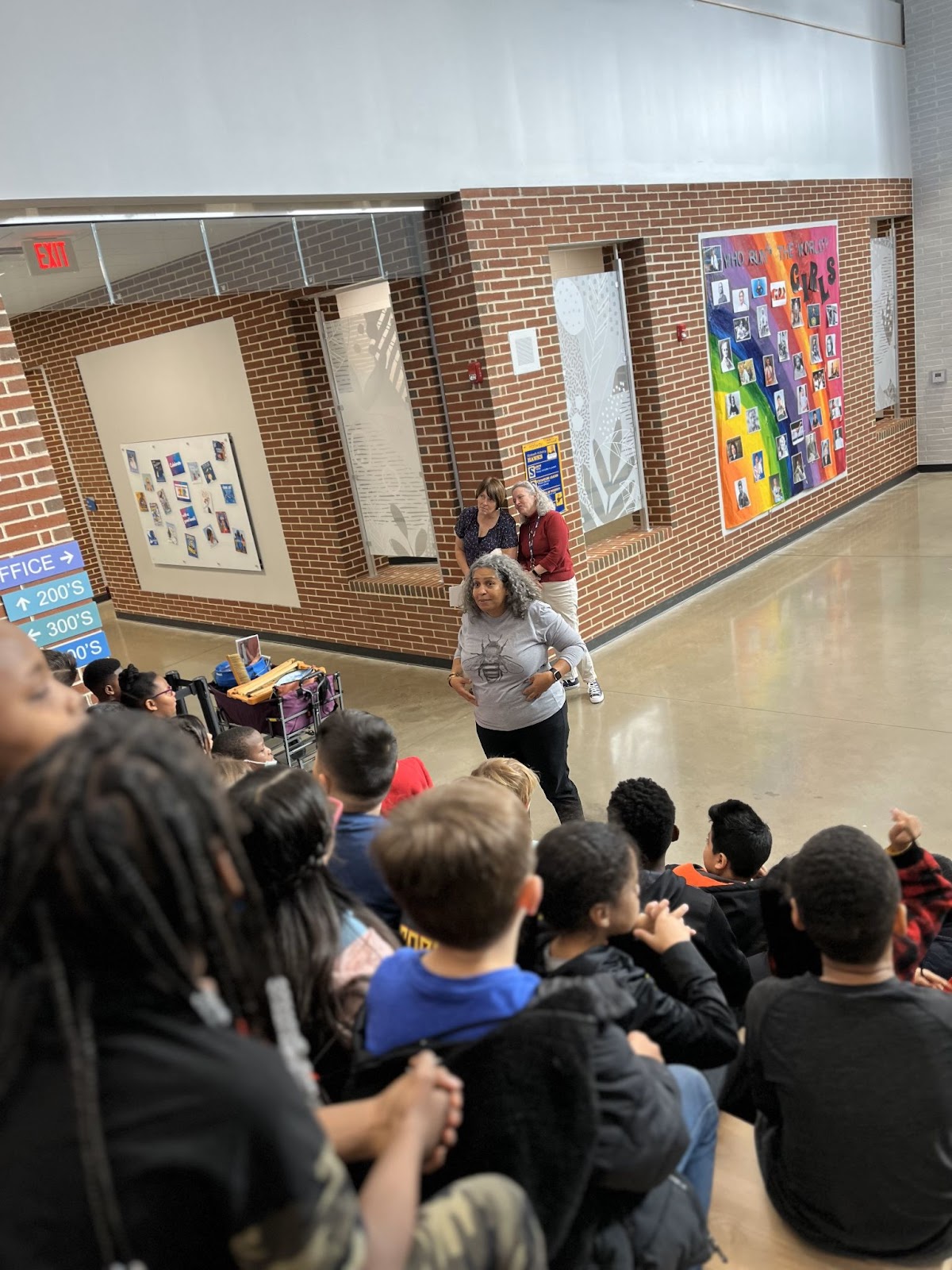
Meet Your Friendly Neighborhood Beekeeper: Dr. Hollee Freeman
Q: How long have you been a beekeeper and how many hives do you manage?
A: I have been a beekeeper for 5 years and I currently manage 8 colonies.
Q: What inspired you to become a beekeeper?
A: I have always loved nature and found myself observing and taking photos of bees. I wanted to install a few hives on the grounds of my workplace, but to no avail. I didn’t have enough information (or energy) to convince the staff that it was a great idea. A few months later, I visited a micro-farm co-managed by a friend. I noticed that she had beehives on the site. She agreed to let me tag along with her for a season and my love of beekeeping was born!
Q: What is the best thing about beekeeping for you?
A: The best thing about beekeeping for me is both the alone, quiet time (complete with the buzzing of the bees) that I experience when in my apiary AND the absolute delight when working with students and adults to learn more about honeybees and beekeeping.
Q: What’s challenging about beekeeping for you?
A: The most challenging thing for me is managing pests. I hope that with continued experiences and learning from more experienced beekeepers, I will be on the offensive with the pests and not the defensive!
Q: What fun, surprising story would you like to share?
A: One Saturday while working with students (who are refugees) in the Tusome Pamoja program, I asked the class, “what do you remember about class last week” (we’d visited one of my out-hives and talked about honeybees). I heard a quiet voice say “ba”. I walked closer to her and said- please say that again. I heard, “ba” again and I knew that I needed to tread lightly. I did not want to move away from this comment, yet I did not understand what she was trying to say.
A student near her said to me – she’s saying ball. “Ok! Ball”, I responded but I was still confused. I did not know what she was referencing and I didn’t want this to be the last time she spoke up in class.
After a few seconds of going through the Rolodex in my mind , I gasped – ?BALL! Yes! The bees get into a ball when it’s cold.” I made the shape of a ball with my hands. “A ball- a cluster! Wow you remembered THAT!”
This student who has only been in the United States for a few months remembered that the bees form a cluster when it’s cold. I was so happy and surprised at that comment! It made me happy to be a beekeeper.
Q: In what ways do you feel like you are making an impact on the environment and/or the community?
A: I am so delighted that I have the opportunity to share my love of honeybees and beekeeping with students and adults on a regular basis. Rick McCormick got me started sharing about bees during Maymont’s summer camp. This year, I was able to provide professional development to staff at Maymont in addition to work during their summer camp. I also work with students in many schools and organizations such as Fit4Kids. I co-manage the CityBeesRVA program to provide access to community members and I have created a BIack Beekeeper Coalition to add more racial and age diversity into the world of beekeeping. We have grown from 4-17 new beekeepers within a year! I also provide beekeeping classes to students in the Tusome Project, as well as the Cultural Roots HomeSchool Co-op through a grant that I successfully acquired. Through these avenues, I am introducing students (and adults) to not only the wonder of honeybees and beekeeping but environmental science more broadly. Even if participants don’t fall in love with bees and beekeeping, my goal is for them to have a newfound respect for this important insect.
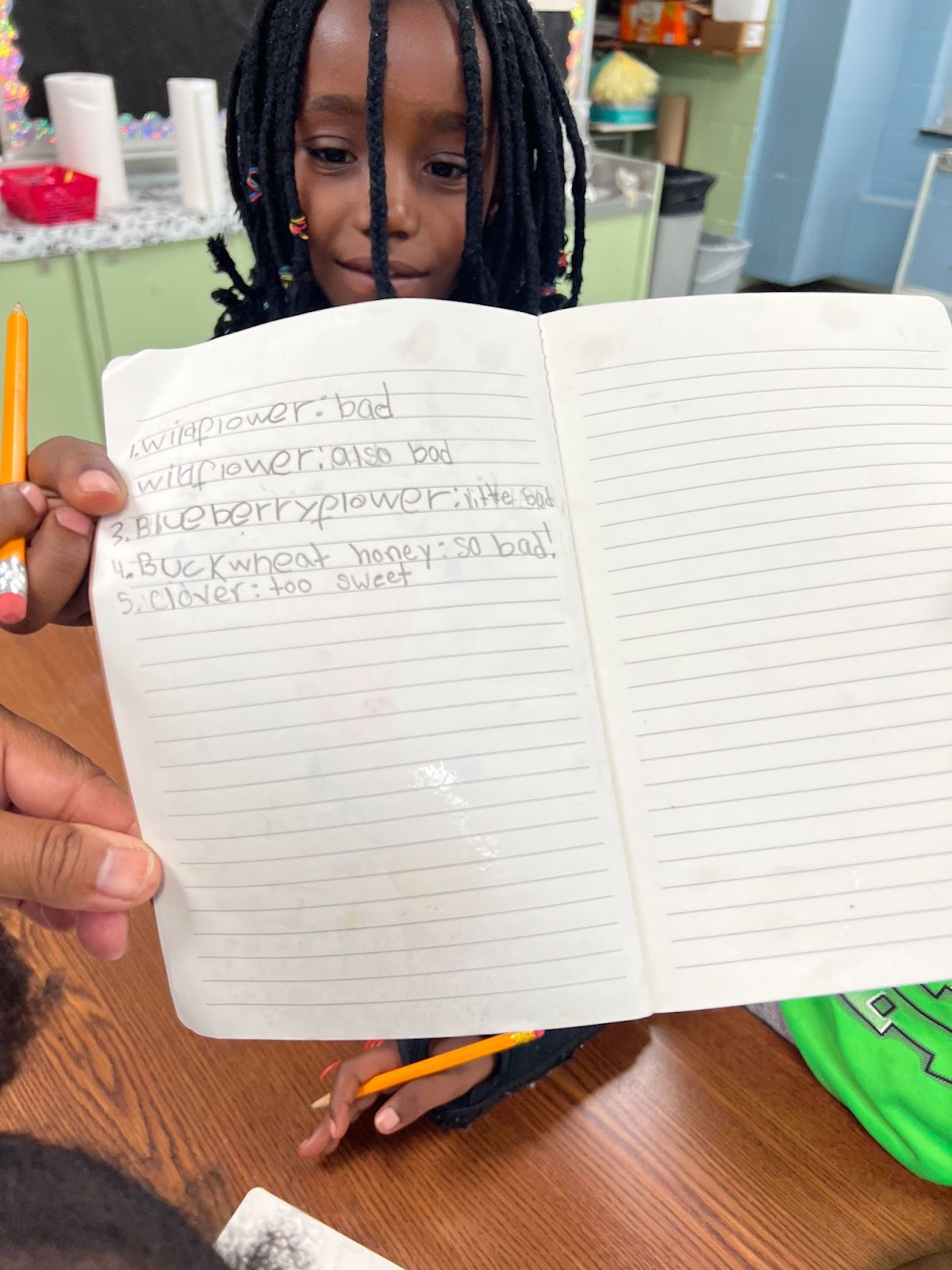
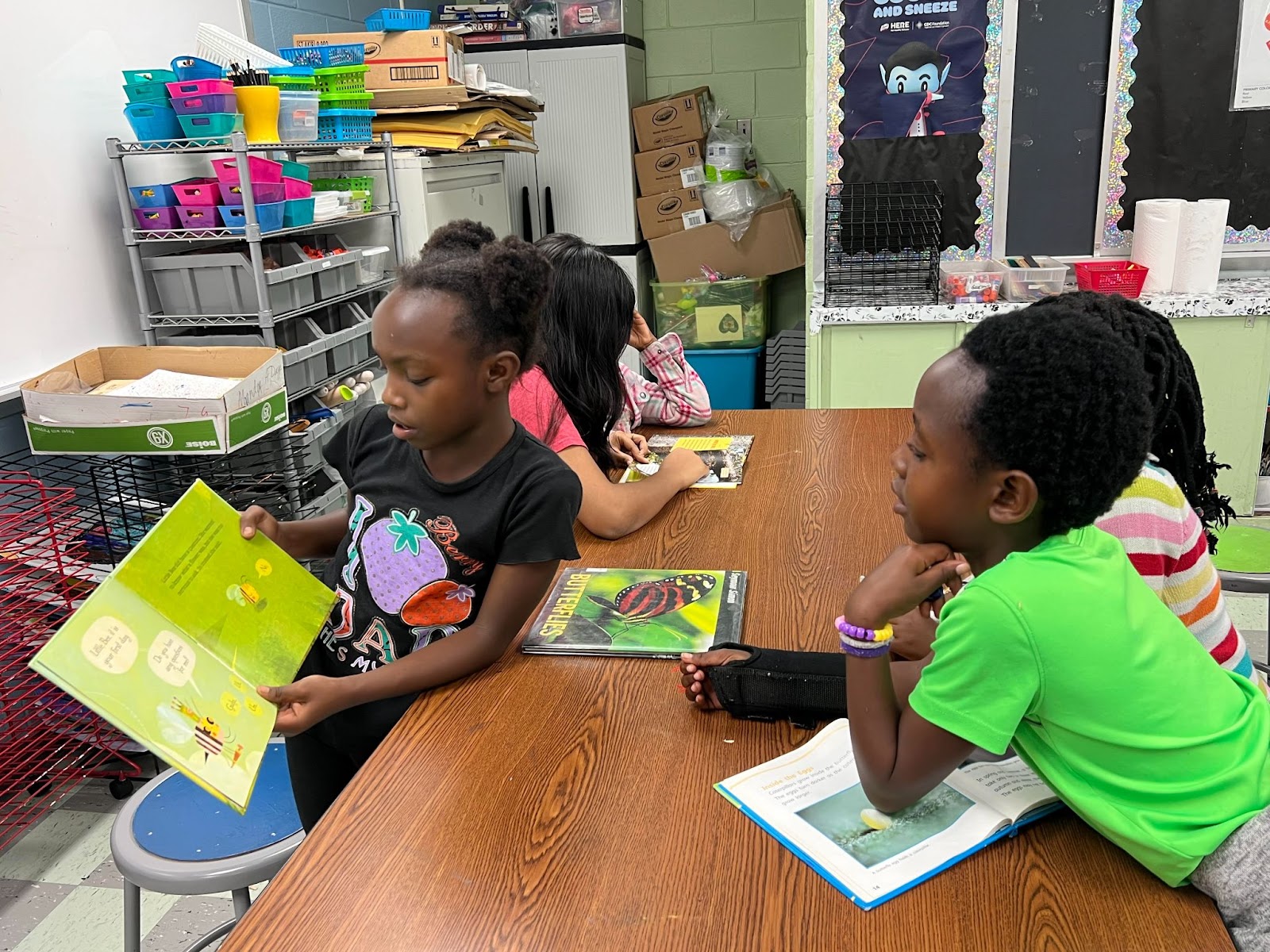
(left pic: Tusome Pamoja students reading bee books to each other. Right pic: The buckwheat honey did not go over well during the honey tasting in class.)
Bee Vocabulary – “candy board”
A candy board is a hardened sugar mixture that’s made to be emergency feed during times of cold weather. Think of it as a large sugar cube. It is placed inside the hive, sitting on top of your frames, just below the inner cover.
Final Word
If you are not a member of RPBBA, we encourage you to join and be active. You can join via our website. If you are a honeybee enthusiast looking to get started, check out the Beginner Beekeeping course.
We are always looking for ways to improve communications in the club. If you have any ideas or suggestions, please let me know.
-Hollee
Hollee Freeman
Communications
Check us out at rockwoodbeekeepers.com!
Like us on Facebook!
Join our Facebook RPBBA Practical Beekeeping Group!
Keep up with what RPBBA is doing, see Calendar of Events!
*****************************************************************************
This is the official Rockwood Park Backyard Beekeepers email. RPBBA will never share your email with anyone outside of the organization or for non-club-related business without your permission. If you wish to update your email or be removed from our email list please complete this form.
 Rockwood Park Backyard Beekeepers